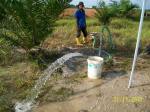
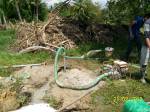
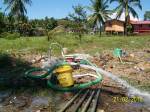
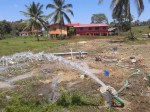
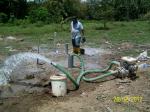
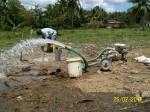
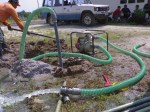
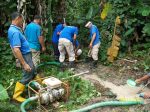
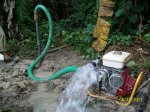
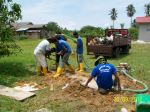
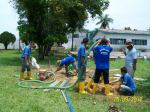
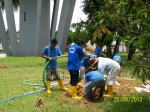
The water jetting method uses water, pumped under pressure through hollow jetting rods with a jetting bit, to loosen the material and carry it to the surface.
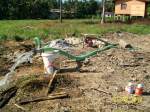
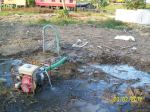
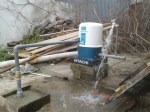
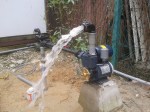
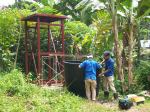
Water jetting is particularly suited to unconsolidated sediments such as low lying areas with potential water bearing sand layers, sandy riverbeds or riverbanks, where water is generally found close to the surface. The water jetting technique can be used to construct a groundwater well point into the sandy riverbed of a dry river so that subsurface water, close to the surface, can be pumped from below the surface. The jet of water is pumped from a pit by using a 5.0 hp centrifugal trash pump and into a steel rod with a jetting bit, and by using manual percussion technique, breaks up the clay and sand. The clay and sand is then flushed up to the surface by the water jets, and allows the pipe to slide into the subsurface. On some floodplains, it is possible to jet through more than 30 meters of silt before reaching an underlying water bearing sand layer.
Small-diameter jetted wells, called “well points or washbores”, are used worldwide to irrigate crops during the dry season.







 Water Jaya Enterprise
Leave a comment